Cross border fees are the additional cost of doing business when you accept transactions from customers from another country, and often a component of payment processing solutions. Cross border fees impact many merchants, particularly those who live in border cities or tourist destinations. This article is about cross borders fees, including what they are and how to avoid them.
What is a cross border fee?
A cross border fee is an extra charge that happens when a payment involves two different countries or a foreign currency. This fee is added by card networks like Visa and Mastercard to cover the extra steps needed to process an international transaction.
Put simply, if your customer is in one country and your business is in another — or if the payment uses a currency that’s not local — the card network may add a cross border fee.
Cross border fees (also known as International Service Assessment or International cross border assessment fees), are designed to account for the additional complexities and risks associated with handling international payments.
Businesses that take payments from customers in other countries may see these fees. They help cover things like changing currencies, following international rules, and handling the extra steps involved in global payments.
Understanding what a cross border fee is makes it easier to plan for international sales and choose the right payment processor.
Credit card or Mastercard cross border fees
Cross border fees are non-negotiable and issued by credit card networks such as Visa, Mastercard, Discover, or American Express. Card networks charge cross border fees to credit card processors like Square or Payment Depot.
In turn, the credit card processor may choose either to absorb the cost of the fees or transfer them to the merchant. You’ll see these fees listed as either a “foreign transaction fee” or “cross border fee”.
Why was I charged a cross border fee?
You’re likely to have been charged a cross border fee if you processed a transaction paid with a foreign credit card. Let’s say a tourist buys an item from your brick and mortar store or a Canadian client buys items from your online store. In both instances, your clients are using credit cards issued by a bank outside the US. When this happens, extra transactions need to take place in order to convert the currency, whether the purchase was in person or online. In some cases, the issuing banks carry additional risks when a country’s currency is unstable.
Whether your business is a physical location, eCommerce, or omnichannel, you’re conducting business in a thoroughly global economy and will undoubtedly have customers from another country come through your physical or digital doors. If they pay with a credit card, they’ll more than likely be using a card issued by a bank in their home country, so cross border fees will apply.
Since 2005, credit card companies and banks have been charging merchants for costs incurred with these transactions.
For instance, Mastercard applies a 0.6% fee on transactions from countries other than the merchant's and another 1.0% on interchange fees on funds that aren’t in American dollars.
Visa has taken a different approach, through the creation of Visa B2B Connect, which makes it simpler for financial institutions to settle cross-border payments. This network operates in over 80 markets worldwide and is beneficial for businesses as it allows transactions to be made directly from their bank to the beneficiary bank, which has an impact on cash flow and creates more transparency and efficiency.
Two variables for applying cross border fees:
Visa and Mastercard assess two variables when determining whether or not to apply and charge cross border fees on transactions.
1. Where is the business registered?
When a business signs up for a payment processing service, they need to report to the country in which their business is registered. All sales that come from within that country will qualify as domestic. Any purchases from outside the business’s registered country will result in cross border fees.
2. What is the location of the card-issuing institution?
Once the location of the merchant account is reported, then credit card companies determine where the card-issuing bank is located.
Can cross border fees be avoided?
Cross border fees can be avoided by using a flat rate pricing structure, making the processing rate on each transaction the same, regardless where the credit card is from.
Cross border fees are one of the many fees charged to merchants who process credit cards. They are the additional cost of doing business when you accept transactions from customers from another country, and often a component of payment processing solutions.
Cross border fees can be thought of as an insurance premium. Processing international transactions require more effort and resources as well as carry more risk to the credit card network. Like insurance fees, they are a necessary evil that must be dealt with in order to be protected in the long run.
Besides switching to a flat rate pricing structure to avoid the cross border fees, consider signing up to Sekure’s Edge Plus program. Designed to eliminate processing fees and give merchants something the industry has never offered at scale— a monthly cashback payout based on monthly credit card processing volume.
If your business is getting charged extra fees such as cross border fees, contact your processor to see if they can be negotiated down.
Questions about cross border fees? Our Payment Experts can help.
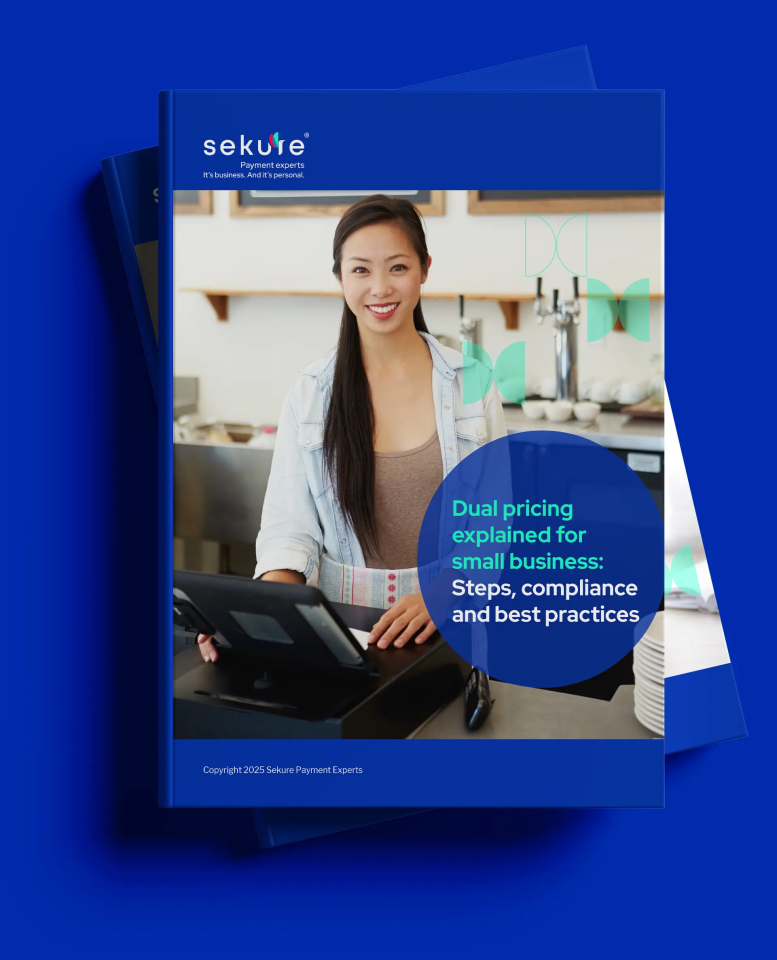
Learn how dual pricing can help you avoid cross border processing fees in our free guide
- Use dual pricing programs like EDGE to save 100% on transaction fees
- Navigate card brand rules and state regulations with ease
- Launch smoothly with clear signage and simple tech